

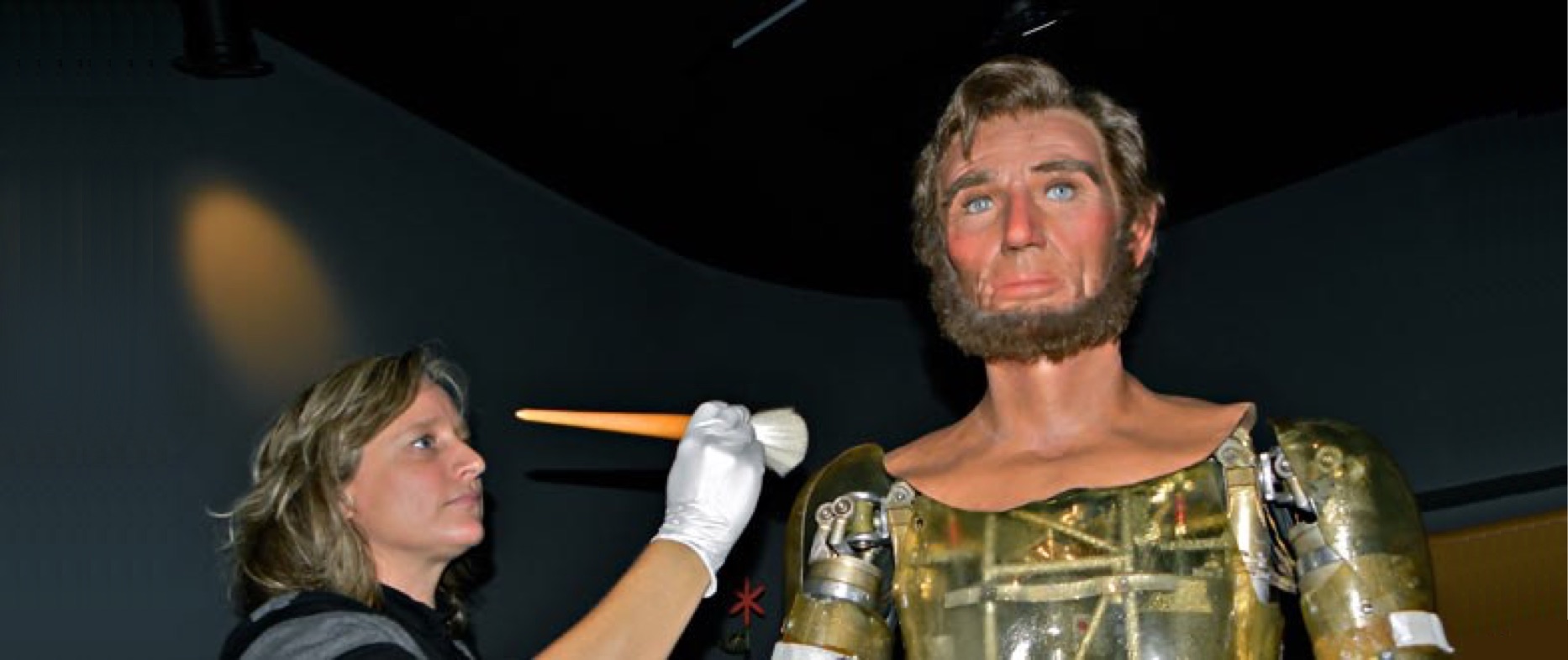
Animatronics is the use of cable-pulled devices or motors to emulate a human or an animal, or bring lifelike characteristics to an otherwise inanimate object. Animatronics is a multi-disciplinary field which integrates anatomy, robots, mechatronics, and puppetry resulting in lifelike animation. Animatronic figures are often powered by pneumatics, hydraulics, and/or by electrical means, and can be implemented using both computer control and human control, including teleoperation. Motion actuators are often used to imitate muscle movements and create realistic motions in limbs. Figures are covered with body shells and flexible skins made of hard and soft plastic materials and finished with details like colors, hair and feathers and other components to make the figure more lifelike. It is truly the frontier where science and art mix into one.
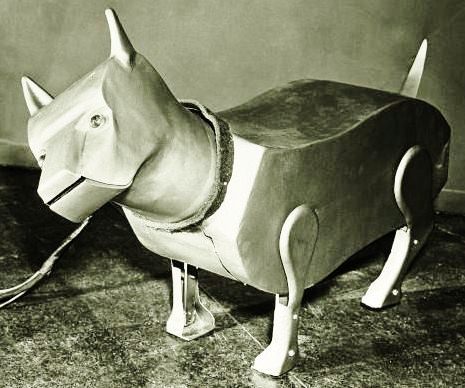
The earliest modern animatronics can actually be found in old robots. While some of these robots were, in fact, animatronics, at the time they were thought of simply as robots because the term animatronics had yet to become popularized. The first animatronics characters to be displayed to the public were a dog and a horse. Each were the attraction at two separate spectacles during the 1939 New York World's Fair. Sparko, The Robot Dog, pet of Elektro the Robot, performs in front of the public at the 1939 New York World's Fair but Sparko is not like normal robots. Sparko represents a living animal, thus becoming the very first modern day animatronic character, along with an unnamed horse which was reported to gallop realistically. The animatronic galloping horse was also on display at the 1939 World's Fair, in a different exhibit than Sparko's.
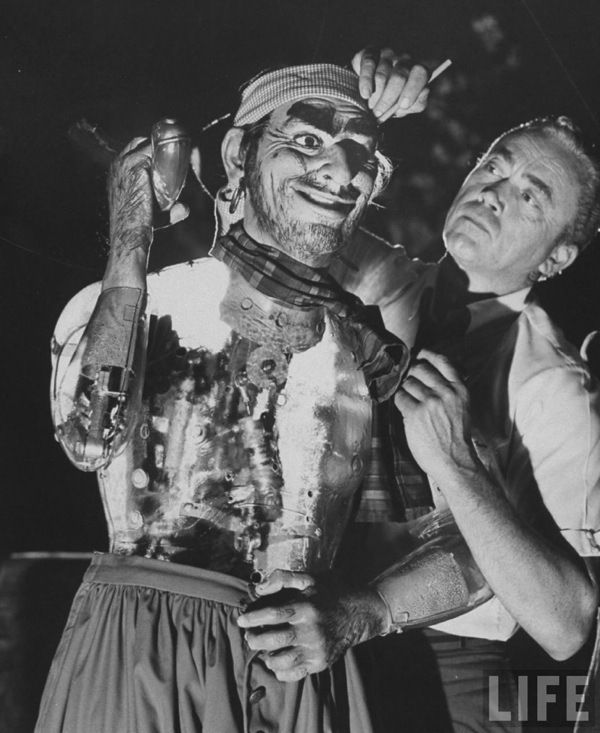
Walt Disney is often credited for popularizing animatronics for entertainment after he bought an animatronic bird while he was vacationing. In 1951, two years after Walt Disney discovered animatronics, he commissioned a machinist and sculptor tasked with creating a figure that could move and talk simulating dance routines performed by Buddy Ebsen. However, the project but was never finished. A year later, Walt Disney Imagineering was created and they made their first project, the "Chinese Head" which was on display in the lobby of their office. Customers could ask the head questions and it would reply with words of wisdom. The Walt Disney Production company started using animatronics in 1955 for Disneyland's ride, the Jungle Cruise, and later for its attraction Walt Disney's Enchanted Tiki Room which featured animatronic Enchanted Tiki Birds. The first fully completed human audio-animatronic figure was Abraham Lincoln, created by Walt Disney in 1964 for the 1964 World's Fair in the New York. In 1965, Disney made an upgraded version of his Lincoln figure coined it as the Lincoln Mark II. For three months, the original Lincoln performed in New York, while the Lincoln Mark II played 5 performances per hour at Disneyland. Body language and facial motions were matched to perfection with the recorded speech.
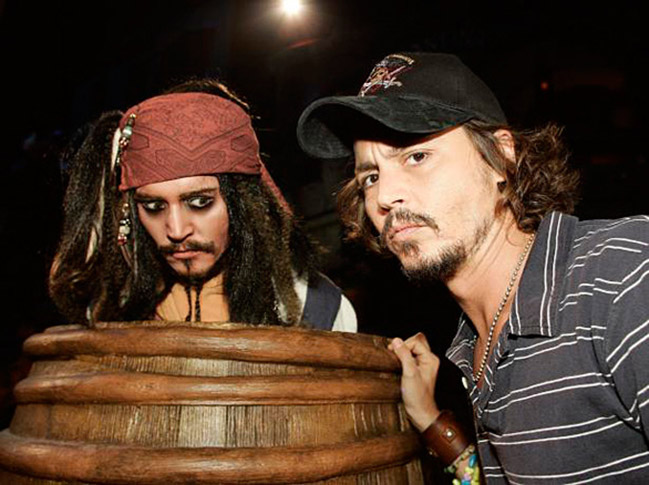
The film industry has been a driving force revolutionizing the technology used to develop animatronics. Animatronics are used in situations where creatures do not exist, the action is too risky or costly to do with real actors or animals, or the action could never be obtained from a living person or animal. Its main advantage over CGI and stop motion is that the simulated creature has a physical presence moving in front of the camera in real time. Animatronics were first introduced in Mary Poppin (1964) which featured an animatronic bird. Since then, animatronics have been used extensively in such movies as Jaws, and E.T. the Extra-Terrestrial, which relied heavily on them. Directors Steven Spielberg and Jim Henson have been pioneers in using film animatronics.Jurassic Park (1993) used a combination of CGI in conjunction with animatronic dinosaurs built. The film's animatronic "T. rex" stood almost 20 feet, 40 feet in length, and even the largest ones weighing 9,000 pounds were able to perfectly recreate the appearance and natural movement on screen of a full-sized dinosaur.

Today animatronics has entered the space of artificial intelligence or AI. The fusion of animatronics with AI results in androids, robots that imitate human behavior. We now have the techniques capable of providing the appearance and behavior of living beings to machines, which some believe is resulting in the 'humanizing' of robots. The Disney company is about to use animatronics and AI to simulate one of their characters in real life: Pascal, one of the characters in the movie Tangled.However, their are many possibilities for android use past entertainment. Dubai is already using police robots created by PAL Robotics. Dubai has the goal of supplementing 25% of their police with androids by 2030.